
Brick Cracks and Foundation Movement in Austin
Brick veneer is stiff and unforgiving, which makes it one of the most readable indicators a house has of what its foundation is doing.
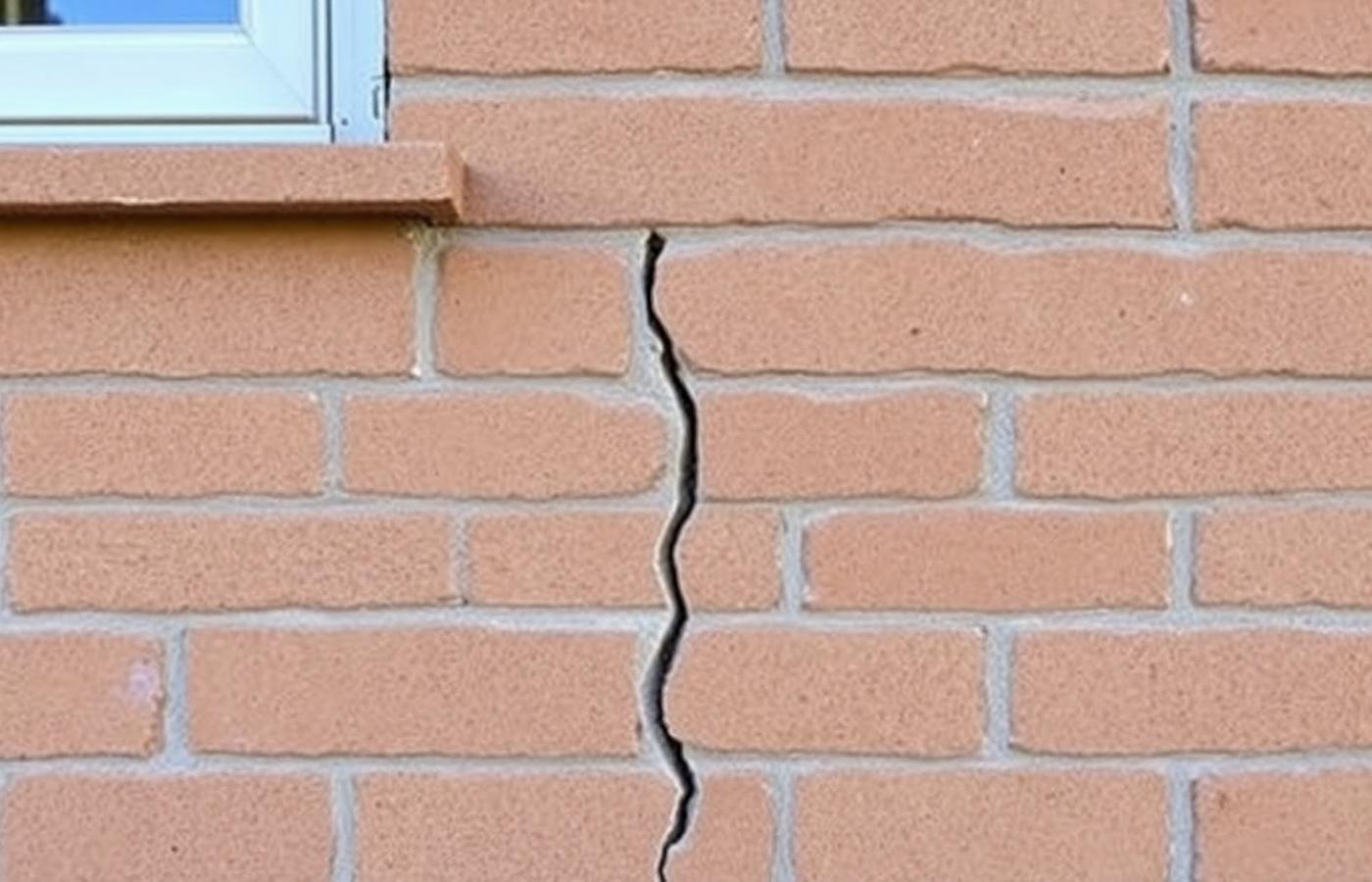
Why masonry cracks in a stair-step pattern
Brick units are strong; the mortar between them is comparatively weak. When a wall is stressed by movement below, the crack takes the path of least resistance — up a vertical head joint, across a bed joint, up the next head joint. The result is the diagonal staircase pattern most Austin homeowners recognize.
Direction carries information. A stair-step crack that widens as it rises typically indicates the foundation below has dropped at that end. A crack wider at the bottom can indicate the opposite: upward movement or heave beneath that section.
Patterns worth documenting
- Stair-step cracking rising diagonally from a window or door corner
- Vertical separation at a building corner where two brick walls meet
- A horizontal gap opening between brick and the slab ledge or between brick and trim
- Brick rowlock or soldier courses that no longer read as level against a straight edge
- Separation where the brick meets a garage opening or porch column
- Cracks that reopen within a year or two of being tuckpointed
Photograph each with something for scale — a coin or a ruler — and note the date. Comparison photos across seasons are among the most useful things a homeowner can bring to an evaluation.
What it usually means for the structure
Brick veneer is not structural in most modern homes: it hangs on the frame and rests on the slab ledge. That is precisely why it cracks so readily — it has almost no ability to flex with movement beneath. Cracking indicates the supporting foundation has changed shape, and the size of the crack roughly tracks the amount of differential movement, though not on a fixed scale.
Confirmation comes from inside: if elevation readings show the floor is low on the same side as the cracking, the two agree and the diagnosis is straightforward. That combined reading is what a foundation evaluation produces.
Repair order matters
Address the movement first, cosmetics second. Where evaluation confirms settlement, stabilization and lift come first; masonry repair follows once the structure is stable, and often some crack closure happens during the lift itself. Reversing that order buys mortar work twice. Pricing context is on the Austin foundation repair cost page.
Request Your Free Evaluation
Share a few details about the property and what you are seeing. Evaluations are based on visible conditions, elevation readings and site factors at your home.
- Free, on-site foundation evaluation
- Slab and pier-and-beam homes
- Clear explanation of repair options
- Written pricing based on real conditions
Frequently Asked Questions
- Is stair-step cracking always a foundation problem?
- Not always, but it deserves attention. Mortar joints are the weak path, so masonry cracks step through them whenever the wall is stressed. Thermal movement and lintel issues can also cause cracking, which is why the crack is read alongside floor elevations.
- Can I just have the mortar repaired?
- Tuckpointing restores appearance, but if the movement is ongoing the crack returns, often within a year or two. Repointing makes sense after the structure is stable.
- Why do brick cracks appear near windows and corners?
- Openings interrupt the wall, concentrating stress at their corners, and building corners are where differential movement between two walls shows up first.
Concerned About Your Foundation?
Get a free on-site foundation evaluation based on what is actually happening at your property — not a guess from a photo.