
Foundation Piers in Austin, TX
Piers are the structural answer when the soil directly beneath a foundation can no longer be relied on to hold it up.
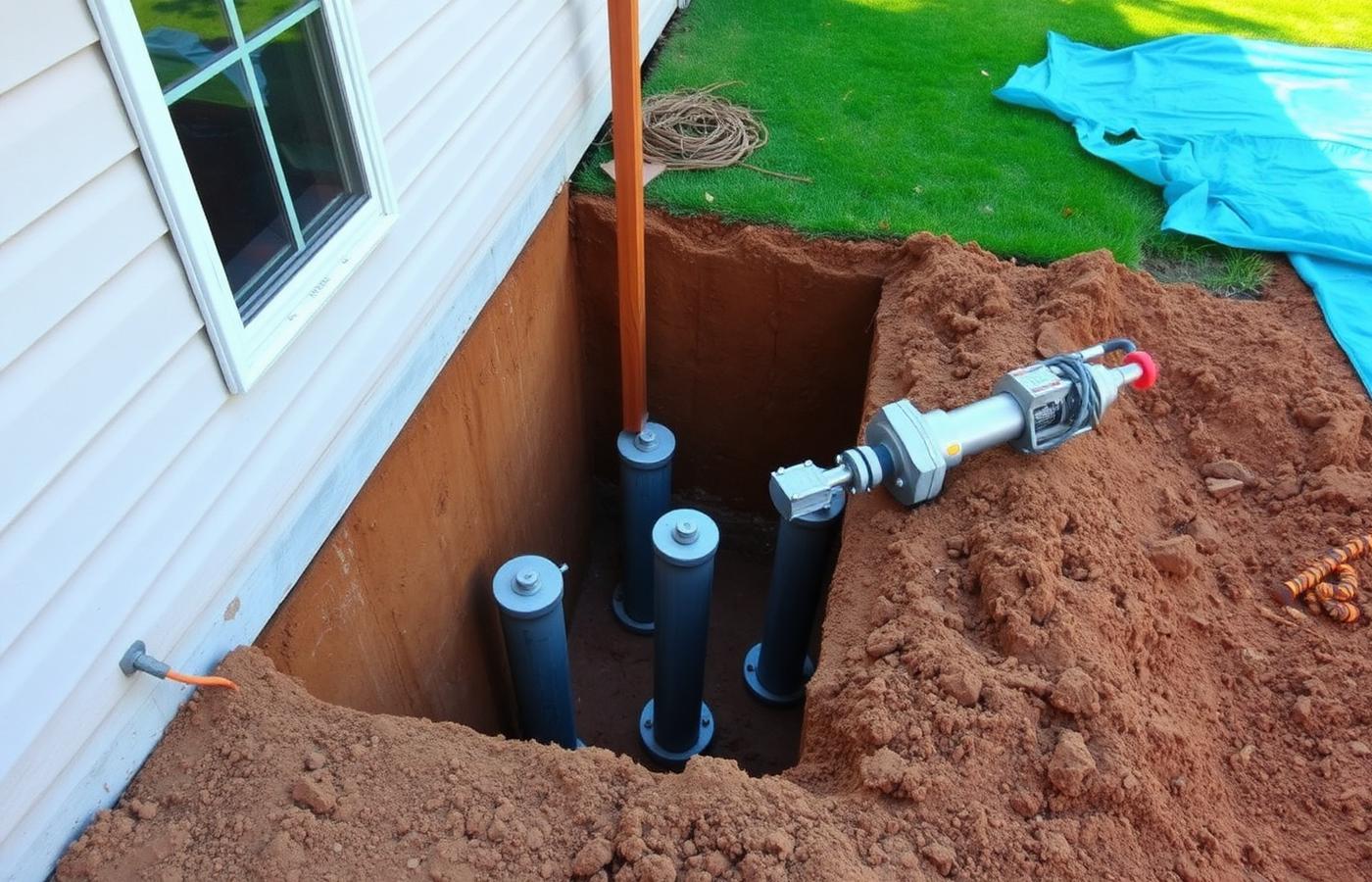
The role of a pier
A foundation pier bypasses the problem soil. Instead of asking the top few feet of ground — the layer most affected by drought, rain and irrigation — to carry the house, a pier carries that load downward to material that is denser, deeper, and far less reactive to weather.
That is the whole concept of underpinning. Once load transfer is achieved, the supported section stops following seasonal soil movement, and in many cases can be lifted back toward its original elevation during the same operation.
Where piers are placed
- Perimeter piers along the exterior grade beam, the most common configuration on settled slab homes.
- Interior piers under interior beam lines when the center of the slab has dished, requiring access through the floor.
- Crawl space piers replacing or supplementing original pads on pier-and-beam homes.
Placement follows the elevation survey, not a uniform spacing rule. Piers installed where they are not needed add cost without changing behavior.
Different systems, different situations
There is no universally superior pier system, and any contractor claiming otherwise is selling a product rather than solving a problem. What matters is depth to competent bearing, structural load at each point, soil profile, site access, and how the system behaves in the specific conditions on your lot.
- Steel piers — driven in segments to measurable resistance; well suited where bearing depth is uncertain or substantial.
- Concrete piers — pressed or drilled; long-established in Texas residential work and often economical where the soil profile suits them.
Both are legitimate. The right question is not "which pier is best" but "what is under this house, and how deep does support need to go." Pricing detail is on the foundation pier cost page.
Request Your Free Evaluation
Share a few details about the property and what you are seeing. Evaluations are based on visible conditions, elevation readings and site factors at your home.
- Free, on-site foundation evaluation
- Slab and pier-and-beam homes
- Clear explanation of repair options
- Written pricing based on real conditions
Frequently Asked Questions
- How deep do foundation piers go in the Austin area?
- It varies widely with the site. Where competent bearing material is shallow — common on parts of the western side of the metro — piers can be relatively short. In deeper soil profiles on the east side, piers may extend considerably further before they reach adequate resistance.
- Do piers stop foundation movement permanently?
- Piers stabilize the portion of the structure they support by transferring its load to deeper material. They do not change the soil elsewhere on the lot, which is why drainage and moisture management often remain part of the plan.
- Are interior piers always necessary?
- No. Interior piers are used when elevation readings show the middle of a slab has dropped relative to the perimeter. Many projects are perimeter-only.
Concerned About Your Foundation?
Get a free on-site foundation evaluation based on what is actually happening at your property — not a guess from a photo.