
Foundation Drainage Correction in Austin, TX
Water is the variable most often driving foundation movement in this market — and one of the few that a homeowner can genuinely control.
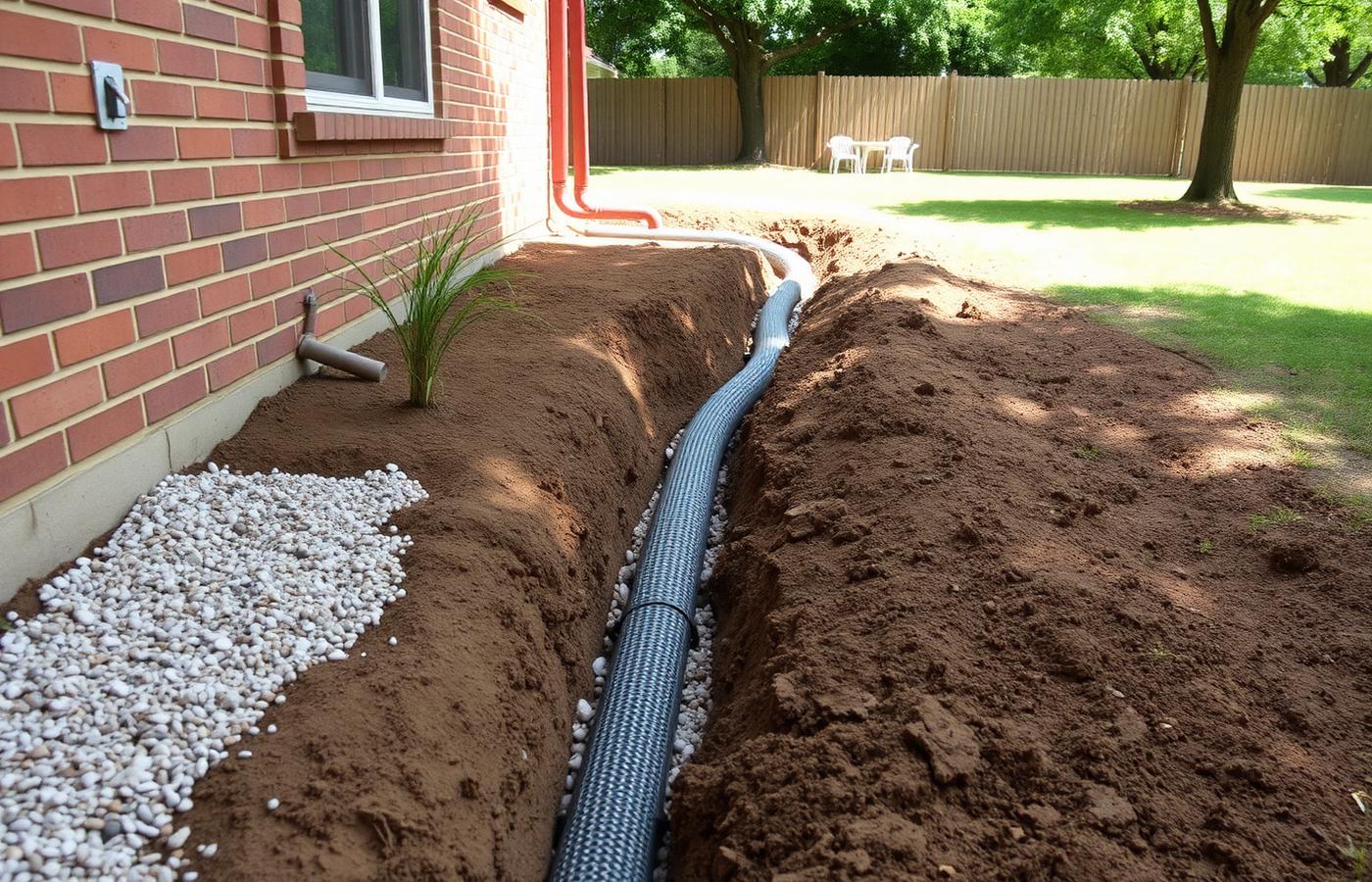
Why moisture control matters here
Central Texas weather is not gentle on soil. Months of deficit are followed by rainfall that arrives faster than the ground can absorb it. Soils that respond to moisture change — clay-influenced profiles in particular — expand and contract through that cycle, and a foundation sitting on top experiences those volume changes unevenly.
"Unevenly" is the key word. If the ground around an entire house dried and rewetted identically, the structure would mostly move as a unit. Damage comes from differential conditions: a shaded north side that stays damp while a sun-exposed south side bakes, or a corner where a downspout concentrates runoff.
What we look at
- Grading and slope in the first several feet from the slab
- Downspout placement and discharge distance
- Gutter capacity and overflow points
- Low spots and ponding after rainfall
- Runoff arriving from neighboring lots or slopes
- Irrigation heads spraying the foundation or flower beds against the wall
- Large trees drawing moisture from one side of the house
- Crawl space ventilation and standing water on pier-and-beam homes
Typical corrections
- Regrading. Re-establishing positive fall away from the foundation, which is often lost as beds are built up and mulch accumulates over the years.
- Downspout extensions. Moving discharge well away from the slab, the cheapest high-impact change on most properties.
- French drains and surface drains. Intercepting subsurface or sheet flow where regrading alone cannot solve the path water is taking.
- Bed and irrigation adjustments. Pulling saturated planting beds away from the wall and correcting sprinkler coverage that soaks one elevation.
On the western side of the metro, sloped lots and shallow rock can send water sideways toward a house in ways that surprise homeowners; on the eastern side, flatter lots hold water longer. Read more in Austin soil conditions, and see foundation watering for the drought side of the same problem.
Request Your Free Evaluation
Share a few details about the property and what you are seeing. Evaluations are based on visible conditions, elevation readings and site factors at your home.
- Free, on-site foundation evaluation
- Slab and pier-and-beam homes
- Clear explanation of repair options
- Written pricing based on real conditions
Frequently Asked Questions
- Can drainage work alone fix a foundation problem?
- Sometimes it prevents further movement, particularly when the structure has not moved much yet and a specific water source is the cause. It cannot lift a foundation that has already settled — that requires structural repair.
- How far should soil slope away from the foundation?
- A common guideline is a fall of several inches over the first several feet away from the house. What matters more is that water visibly moves away and does not pond within a few feet of the slab after rain.
- Do gutters really matter that much in Austin?
- Yes. In a climate with long dry periods punctuated by intense rainfall, a single unmanaged downspout can dump thousands of gallons at one corner over a year, creating a very local moisture condition against the foundation.
Concerned About Your Foundation?
Get a free on-site foundation evaluation based on what is actually happening at your property — not a guess from a photo.