
Concrete Leveling in Austin, TX
Settled driveways, sunken sidewalk panels and tilted patios are trip hazards and water traps — and lifting them is usually far cheaper than replacement.
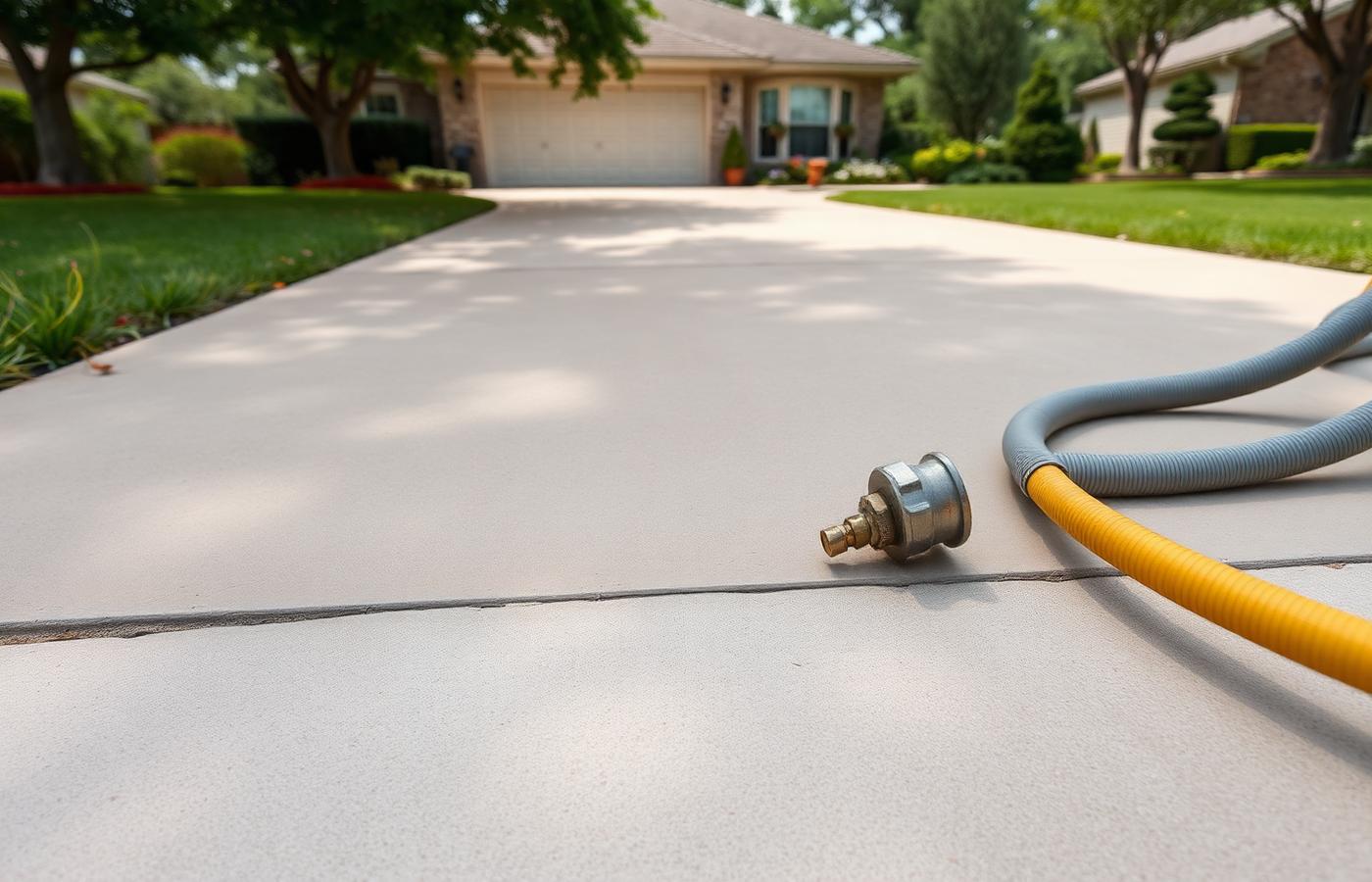
Why flatwork settles
Exterior concrete is poured on soil that was often backfilled during construction and never compacted to the same standard as the building pad. Over time that fill consolidates. Add water — from a downspout, a leaking irrigation line, or sheet flow across a driveway — and soil can wash out from beneath a panel entirely, leaving a void the slab eventually drops into.
In this climate, the drought-and-deluge cycle accelerates the process. Soil shrinks away from the underside of a slab during dry months, then heavy rain moves the loosened material out.
How lifting works
Small ports are drilled through the settled slab, a lifting material is injected beneath it to fill the void and raise the panel back to position, and the ports are patched. The slab is monitored during the lift so adjacent panels stay aligned. Most residential jobs are completed in a single visit, and the surface is generally usable the same day.
Where the void was created by water, the correction should include fixing the water path — otherwise the same panel returns to the same place. That overlaps directly with drainage correction.
Where it helps most
- Driveway panels that have dropped at the apron or garage transition
- Sidewalk sections with a lip creating a trip hazard
- Patios that now slope toward the house instead of away from it
- Porch and stoop slabs pulling away or tilting
- Pool deck panels that have settled unevenly
- Garage floors with a settled section near an overhead door
Flatwork leveling versus structural foundation repair
This distinction saves homeowners real money. A sunken sidewalk does not mean the house has a foundation problem — flatwork sits on backfill and behaves differently from a structural slab designed and reinforced to carry a building. Conversely, lifting a patio does nothing for a house that is actually settling.
Where the two connect: a patio sloping toward the house pushes water at the foundation, and that genuinely matters. If flatwork settlement is paired with cracks in the house or sloping interior floors, a foundation evaluation is the right next step.
Request Your Free Evaluation
Share a few details about the property and what you are seeing. Evaluations are based on visible conditions, elevation readings and site factors at your home.
- Free, on-site foundation evaluation
- Slab and pier-and-beam homes
- Clear explanation of repair options
- Written pricing based on real conditions
Frequently Asked Questions
- Is concrete leveling the same as foundation repair?
- No. Concrete leveling corrects flatwork — driveways, sidewalks, patios, garage and porch slabs — that has settled. Foundation repair addresses the structural slab or pier system carrying the house. They use related ideas but are different scopes with very different pricing.
- How long does leveled concrete last?
- The lift itself is durable, but longevity depends on whether the cause was addressed. If washout from a downspout created the void, and the downspout is unchanged, the slab can settle again.
- Can badly broken concrete be leveled?
- Lifting works best on slabs that are intact but out of position. Concrete that is severely spalled, crumbling or broken into many pieces is usually better replaced.
Concerned About Your Foundation?
Get a free on-site foundation evaluation based on what is actually happening at your property — not a guess from a photo.