
Local guide
Should You Water Your Foundation in Austin?
It is one of the most common questions Austin homeowners ask during a hot, dry summer — and the honest answer is 'sometimes, carefully, and not as a repair.'
The idea behind foundation watering
Where soil changes volume with moisture, damage comes from swings — deep drying followed by rapid rewetting. Foundation watering attempts to flatten those swings by keeping perimeter soil at a reasonably steady moisture level through the driest part of the year, so the soil neither shrinks dramatically nor expands sharply when rain finally arrives.
The goal is stability, not saturation. That distinction is where most homeowners go wrong.
What drought does to soil around a slab
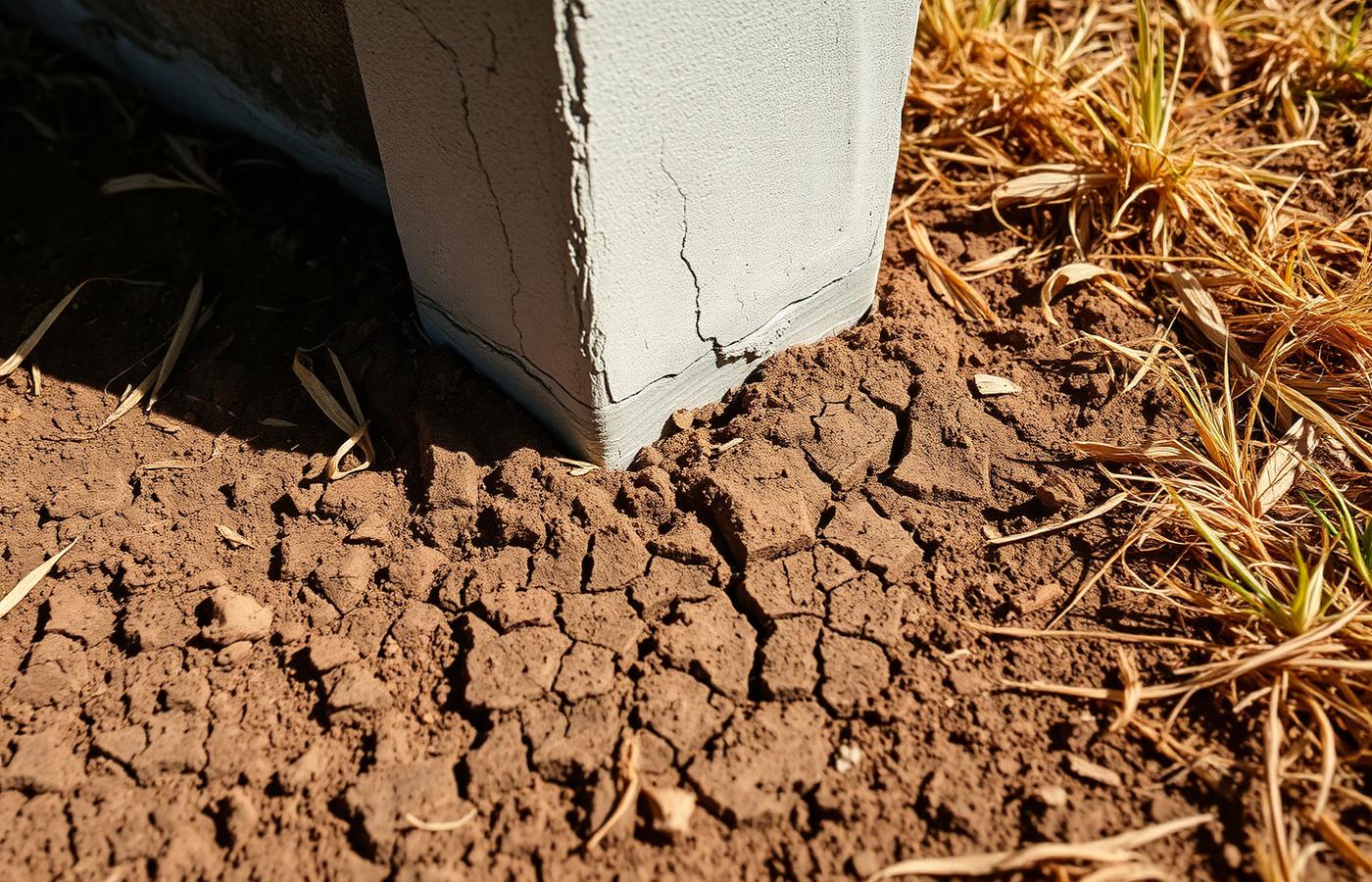
After weeks without rain, moisture-reactive soil at the perimeter loses volume. You can often see the result: a visible gap between soil and the slab edge, wide surface cracks in bare ground, and landscaping pulling back from beds. That shrinkage removes support from the outer edge of the foundation, which is where settlement most often begins.
When the drought finally breaks, water runs straight down those open cracks and reaches deep, dry soil quickly — producing fast expansion and sometimes heave. The rebound can be as damaging as the drying.
Doing it sensibly
- Consistency over volume. Frequent light applications maintain a steadier moisture level than occasional heavy soaking.
- Even coverage. Treat the whole perimeter. Watering only the sunny south side while the shaded north side stays untouched creates the exact differential that causes damage.
- Right distance. Generally a foot or two out from the slab, not directly against it.
- Watch the ground, not the calendar. Visible shrinkage gaps mean too dry. Soft, muddy soil or standing water means too much.
- Do not create a moat. Continuous saturation against the foundation can produce heave, encourage crawl space moisture problems, and undermine drainage.
- Check restrictions. Local watering rules change with drought stage.
When watering does not apply
This practice is aimed at moisture-reactive soils. Homes on shallow limestone or well-drained rocky profiles — more common on the western side of the metro — see much less benefit, and adding water on a slope can create runoff problems that did not exist before.
It is also the wrong tool for an existing problem. If your floors already slope, doors already stick, or brick is already cracking, watering will not reverse it. That is a case for a foundation evaluation, and possibly repair. See Austin soil conditions to understand which category your property likely falls into.
Request Your Free Evaluation
Share a few details about the property and what you are seeing. Evaluations are based on visible conditions, elevation readings and site factors at your home.
- Free, on-site foundation evaluation
- Slab and pier-and-beam homes
- Clear explanation of repair options
- Written pricing based on real conditions
Frequently Asked Questions
- Should I water my foundation in Austin?
- If your property has moisture-reactive soil and you see the ground shrinking away from the slab in dry months, keeping perimeter moisture reasonably consistent can reduce the extremes. If your home sits on shallow rock or the soil does not visibly shrink, watering offers little and can be counterproductive.
- How often should a foundation be watered during drought?
- The aim is consistency, not volume — short, frequent applications that keep moisture steady rather than heavy soaking that swings conditions. Watch the soil at the perimeter and adjust; visible gaps mean it is too dry, standing water means too much.
- Where should the water be applied?
- Generally a foot or two out from the slab edge, distributed evenly around the perimeter. Uneven coverage — one side watered, the rest not — recreates the differential you are trying to avoid.
- Can watering fix a foundation that has already moved?
- No. Watering is a maintenance practice aimed at reducing extreme soil moisture swings. It does not restore elevation or repair damage, and it cannot substitute for structural repair where movement has already occurred.
- Does watering conflict with Austin water restrictions?
- Restrictions change with drought stage and can affect timing and method. Check current City of Austin or your local utility's rules before setting a schedule, and note that soaker hoses and hand watering are sometimes treated differently from sprinklers.
Concerned About Your Foundation?
Get a free on-site foundation evaluation based on what is actually happening at your property — not a guess from a photo.