
Core service
Residential Foundation Repair in Austin, TX
Foundation repair for slab and pier-and-beam homes — planned around how your foundation is moving, not a one-size package.
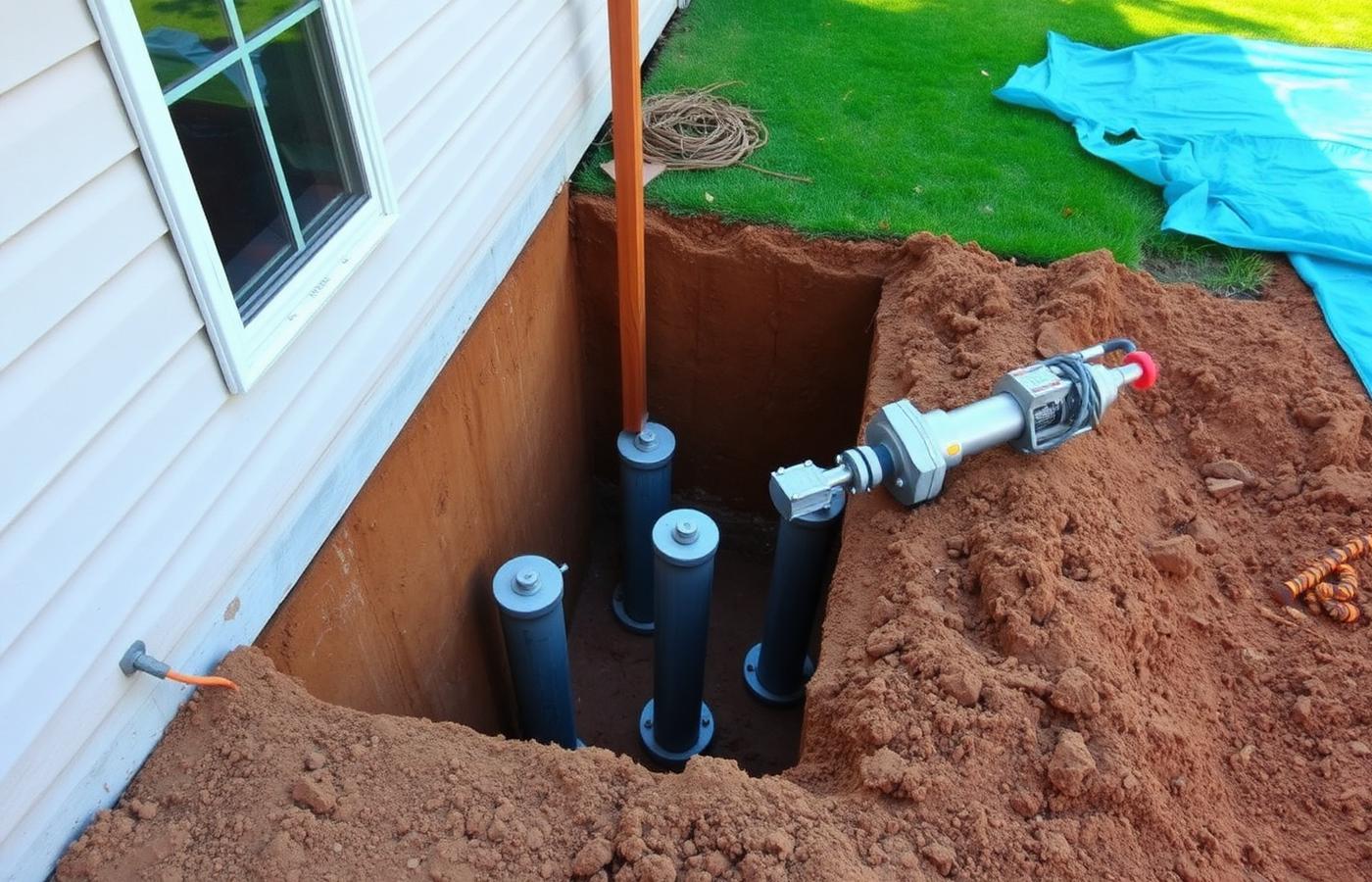
What foundation repair actually addresses
A foundation is doing one job: distributing the weight of the house evenly onto the ground below. It fails at that job when the ground under one part of it changes — losing volume during drought, gaining volume after saturation, washing out, compressing under poorly compacted fill, or softening from a leak. The structure follows the ground, and that movement travels upward into walls, floors, doors and masonry.
Repair therefore has two possible goals: stabilization (stop the affected area from moving further) and recovery (bring it back toward its original elevation where the structure allows). Which of those is realistic depends on how far the house has moved, how brittle the finishes are, and what is underneath.
Settlement versus movement
Not all movement is settlement. Settlement is downward movement, usually uneven, and it is what most homeowners picture. Heave is upward movement — common where reactive clay gains moisture, whether from rain, irrigation or a plumbing leak under the slab. Seasonal cycling is a third pattern: a foundation that drops in August and partially recovers in November is telling you something specific about the soil around it.
These behave differently and are corrected differently, which is why elevation readings taken at one moment are interpreted alongside crack patterns, drainage, and the age and type of the structure.
Warning signs worth an evaluation
- Doors and windows that stick or no longer latch
- Stair-step cracking in exterior brick or stone
- Interior cracks above door and window corners
- Floors that slope, dip or feel bouncy
- Gaps between walls, ceilings and trim
- Separation at a garage door frame or brick ledge
- Cracks that widen and narrow with the seasons
- Water pooling against the foundation after rain
One sign alone is not a verdict. Several appearing together, or a single sign that keeps worsening month over month, is the practical threshold for getting the property looked at.
How repair gets planned
A useful repair plan answers four questions: where is the house out of level, which direction is it moving, what is driving that movement, and what is the least invasive way to correct it.
- Elevation survey. Readings across the floor establish the shape of the movement — perimeter drop, interior dish, corner settlement or dome.
- Exterior and drainage review. Grading, downspouts, irrigation, tree proximity and runoff patterns often explain why one side of a house is affected.
- Method selection. Piers where structural support is needed, leveling where elevation recovery is the goal, and drainage correction where moisture control is the real fix.
- Scope and pricing. Pier count, depth, access and any framing repair drive the number. See the Austin cost guide.
Why inspection comes first: a quote written without elevation data is a guess, and guesses in this trade are usually expensive in one direction or the other.
Request Your Free Evaluation
Share a few details about the property and what you are seeing. Evaluations are based on visible conditions, elevation readings and site factors at your home.
- Free, on-site foundation evaluation
- Slab and pier-and-beam homes
- Clear explanation of repair options
- Written pricing based on real conditions
Frequently Asked Questions
- Does every foundation problem need piers?
- No. Some homes need drainage correction and moisture management rather than structural underpinning, and some pier-and-beam homes only need shimming and beam work. Piers are the answer when a section of the structure needs to be supported by deeper, more stable bearing.
- How long does residential foundation repair take?
- A typical pier installation on a slab home is often completed in a few days once work begins, depending on pier count, access and weather. Pier-and-beam leveling varies with crawl space access and how much framing repair is involved.
- Will repairs close all my cracks?
- Stabilizing and lifting a foundation usually improves crack width and door alignment, but cosmetic finishing — drywall, paint, mortar tuckpointing — is normally a separate step. Nobody should promise every crack will disappear.
Concerned About Your Foundation?
Get a free on-site foundation evaluation based on what is actually happening at your property — not a guess from a photo.